 Skip to content
How Cool Is Too Cool for Exterior Painting?
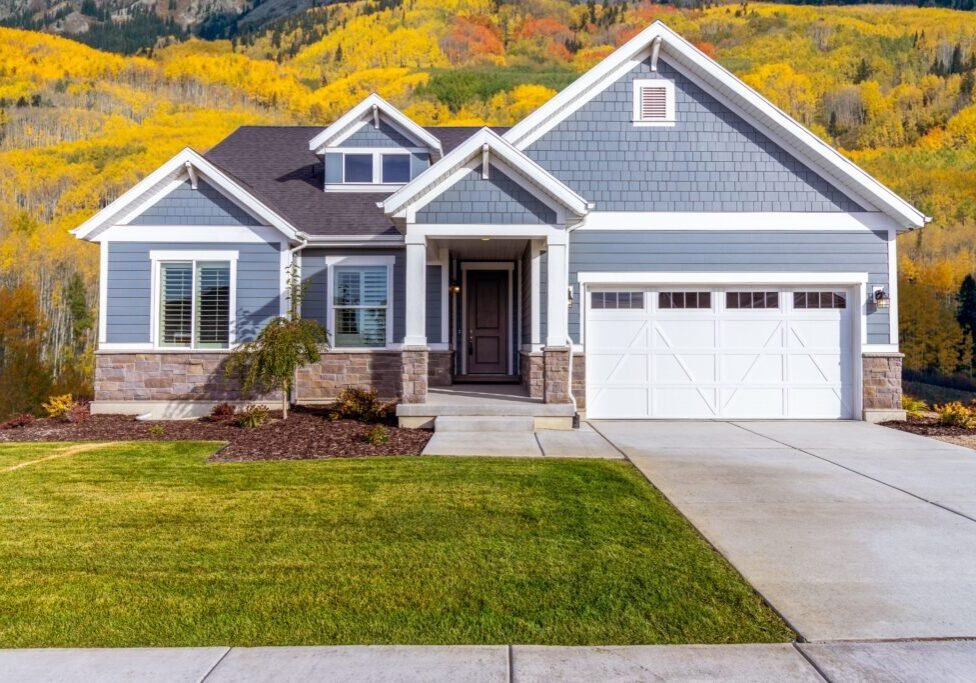
The first cool mornings of fall often bring the same question from homeowners: Is it too late in the season to paint the outside of the house?
Not necessarily. Exterior painting can continue in cooler weather when the selected paint is formulated for those conditions, and the forecast allows enough time for it to dry and begin curing. However, the number on a weather app is only one part of the decision.
For many modern exterior acrylic paints, 35°F is the lowest permitted application temperature. That does not make 35°F a universal rule. Other paints, primers, caulks, stains, and specialty coatings may require temperatures of 40°F, 50°F, or warmer. The product label or technical data sheet is the final authority, and its limits may apply to the air, the surface, and the coating itself.
The practical answer is that it is too cool to paint when any part of the coating system falls outside the manufacturer's requirements or when falling temperatures, dew, frost, rain, or damp surfaces will interrupt drying. A professional painter evaluates the entire weather window, not only the afternoon high.
What Is the Minimum Temperature for Exterior Painting?
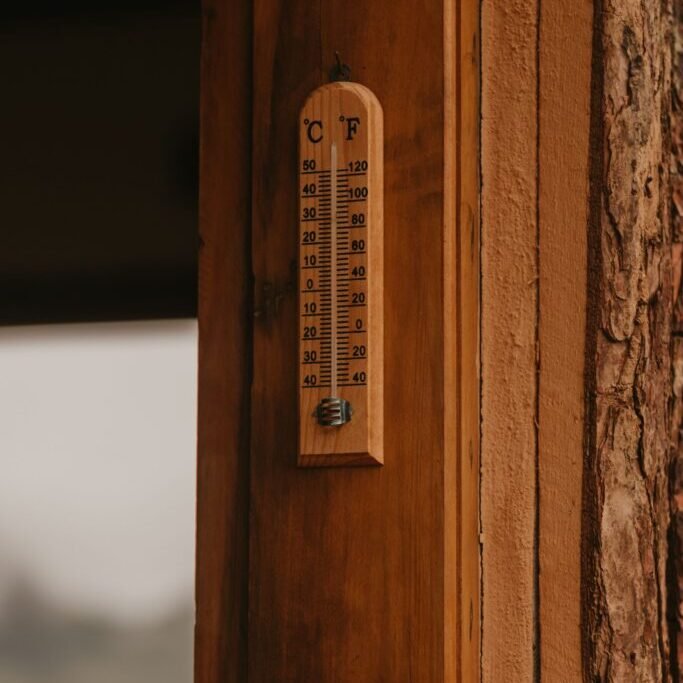
There is no single minimum temperature for every exterior paint. Traditional guidance often placed the cutoff near 50°F, but many current exterior acrylic formulas are designed for lower-temperature application.
Sherwin-Williams lists several exterior paints formulated for application down to 35°F, including Emerald, Duration, SuperPaint, and A-100. Benjamin Moore's exterior temperature guide also identifies 35°F to 100°F as a general working range while noting that approximately 77°F with low humidity is ideal. Behr's cold-weather guidance similarly explains that a 35°F minimum applies only to water-based paints specifically formulated for low-temperature use.
Those numbers show why a contractor should select the product before deciding whether the forecast is acceptable. A low-temperature topcoat cannot compensate for a primer, caulk, patching compound, or substrate treatment that needs warmer conditions. Every component used on the project must be compatible with the day's conditions.
Why Air Temperature Is Only Part of the Decision
The temperature reported for your neighborhood measures the air under standardized conditions. The siding, trim, brick, stucco, metal, or wood being painted can be warmer or colder than that reading.
A shaded north-facing wall may stay cold well into the morning, while a sunny wall can warm and then cool quickly once the sun moves.
That is why professional painters evaluate surface temperature along with ambient air temperature. The paint itself matters too. Material stored overnight in an unheated vehicle or garage may remain colder than the air long after the day begins.
If a product requires the air, surface, and paint to be at least 35°F, all three must meet that requirement. The same temperatures may also need to remain within range for a stated period after application. For example, Behr Premium Plus Exterior specifies dry substrates, air and surface temperatures from 35°F to 90°F, and at least four hours within that range after application.
A sunny afternoon high does not guarantee a usable painting day. The surface may start too cold or fall below the required range before the coating has had enough time to set.
Dew Point, Frost, and Overnight Temperatures Matter
Cool-season painting decisions often come down to moisture rather than temperature alone. As the air cools toward its dew point, moisture can condense on exterior surfaces. According to the National Weather Service's explanation of dew and frost, dew forms when the temperature reaches the dew point, while frost develops when the surface falls below the frost point.
A wall can look dry in the afternoon and collect moisture after sunset. Fresh paint that encounters dew before it has developed enough moisture resistance may show staining, uneven gloss, streaking, or adhesion problems. Sherwin-Williams notes that cool temperatures and surface moisture can interfere with proper film formation and recommends considering conditions during the first 48 hours of drying, not only during application.
This makes the overnight low especially important. If the forecast calls for a rapid temperature drop, heavy dew, fog, or frost, the safe painting window may end hours before sunset. Professional crews may begin later in the morning, after damp surfaces dry, and stop earlier in the afternoon, so the coating has time to develop before evening moisture arrives.
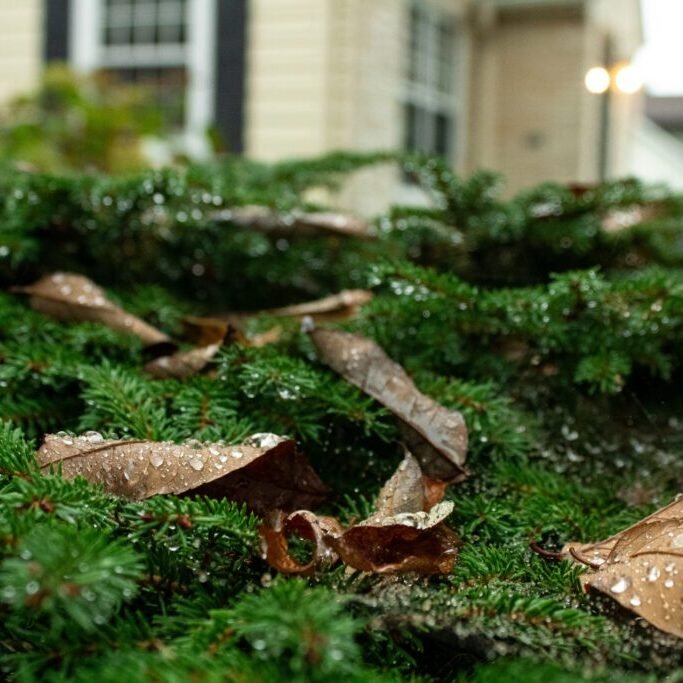
Can You Paint Outside in 40- or 50-Degree Weather?
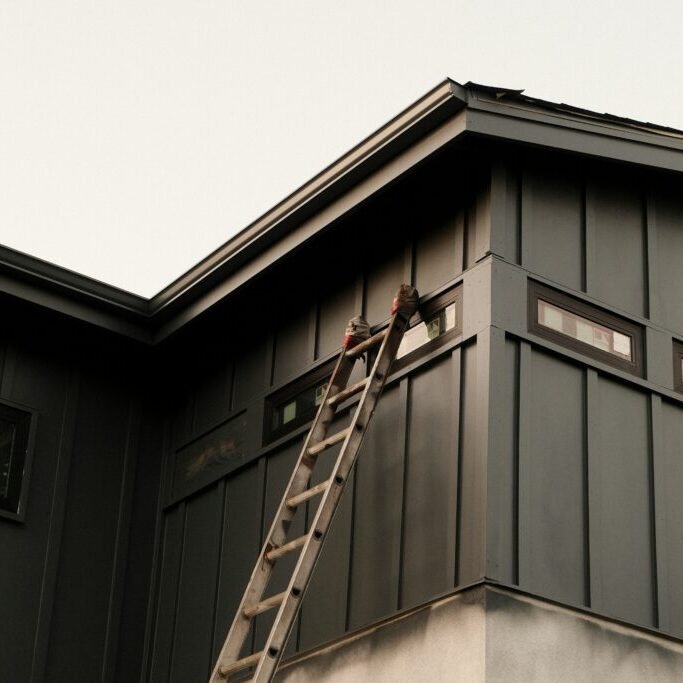
In many cases, yes. Exterior painting in the 40s or 50s can produce a durable result when the chosen product permits it, the surface is dry, and the temperature will remain within the required range while the coating dries.
However, a day that reaches 50°F for one hour may offer less usable painting time than a steady 45°F day with low humidity and a mild overnight forecast. The direction of the temperature matters. A morning warming into the 40s may be workable later in the day. A late afternoon that is already falling through the 40s may not be.
Lower temperatures and higher humidity generally increase dry and recoat times. The crew may need to adjust the order of work, complete smaller sections, or postpone a second coat. Paint can also feel dry while the film is still developing, so the manufacturer's full drying and weather-resistance instructions matter.
What Can Go Wrong When Exterior Paint Is Applied Too Cold?
Exterior paint is designed to form a continuous film as water or solvent leaves the coating and its components come together. When conditions fall outside the product's limits, that process may not happen as intended.
The paint may dry slowly, remain soft or tacky longer than expected, develop an uneven sheen, or become vulnerable to early moisture. In more serious cases, the coating may not adhere properly and could peel or fail earlier than it should. Dew on uncured latex paint can also contribute to surfactant leaching, which may appear as shiny, discolored, or streaked areas on the finish. Sherwin-Williams identifies early dew exposure as a cause of this problem.
Painting below the allowed minimum also risks voiding the performance expectations associated with the product. A premium coating cannot deliver its intended durability if it is applied to a damp surface or outside its specified temperature range.
The safer choice is to lose a day of painting rather than compromise a finish expected to protect the home for years.
How Rain and Humidity Change a Cool-Weather Forecast
Rain resistance varies by product and by conditions. Some paints are engineered to resist rain relatively soon after application. Benjamin Moore Element Guard, for example, is marketed for application down to 35°F and rain resistance as soon as 60 minutes after application. Those claims still come with product-specific instructions and test conditions.
Homeowners should not assume that every exterior paint becomes rain-ready in an hour. Behr notes in its product guidance that lower temperatures, higher humidity, and deep colors can increase both drying time and the time needed to develop rain resistance.
Fog, mist, and heavy overnight condensation can create moisture even when no rain is forecast. After pressure washing or a storm, wood, masonry joints, and shaded surfaces may also remain damp longer than they look.
A professional schedule accounts for the time a surface needs to dry before painting and the protection the new coating needs afterward. That may mean moving the start date, changing which side of the house is painted, or pausing work until a more stable weather window arrives.
Is September or Fall Too Late to Paint a House Exterior?
September is not automatically too late for exterior painting. In many parts of the country, early fall offers moderate daytime temperatures and less intense sun than midsummer. In warmer climates, the comfortable exterior season may continue much longer.
Location changes the answer. A September project in Michigan, Utah, North Carolina, or Florida will face very different temperature, humidity, daylight, and storm patterns. Even within the same city, a shaded wooded property can dry more slowly than a home with open sun exposure.
Fall exterior painting is most successful when the schedule remains flexible. A professional estimate should identify the surfaces, preparation, repairs, and proposed products. From there, the crew can monitor the forecast and explain any weather-related adjustments before work proceeds.
How Professionals Plan a Late-Season Exterior Project
The right decision begins with the coating system. Professional painters review technical data for the paint, primer, caulk, stain, and repair materials planned for the home. They then compare those limits with the expected air temperature, surface temperature, humidity, dew point, rain, wind, and overnight conditions.
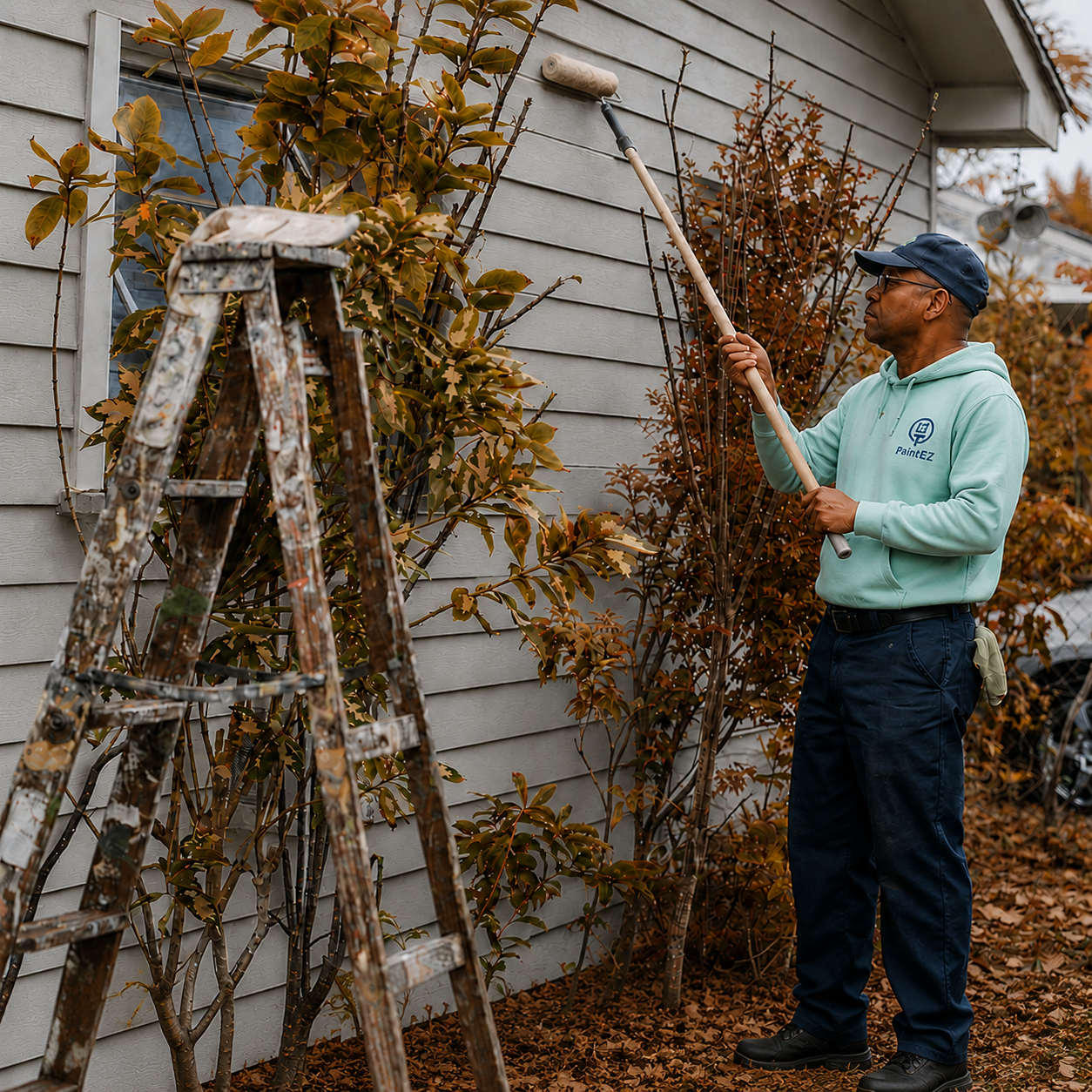
On the jobsite, the crew verifies that the surface is clean and dry. Work may start later to allow morning dew to evaporate, then stop early enough for the fresh coating to develop before temperatures fall. The team may also divide the project into sections that fit the available weather window.
Preparation remains essential in every season. Paint EZ's exterior painting process includes evaluating the home, pressure washing, addressing approved preparation and repair needs, selecting suitable products, applying the coating under appropriate conditions, and completing a final walkthrough.
Should You Schedule an Exterior Quote in Cooler Weather?
Yes. An estimate gives the contractor a chance to inspect the materials, identify preparation or repair needs, discuss colors, and select products appropriate for the surface and local climate. If the weather window closes, planning ahead can position the home for the next suitable opening or the following season. Paint EZ offers professional color consultation services to help coordinate the exterior with roofing, brick, stone, landscaping, and other permanent features.
The most important takeaway is simple: the calendar does not decide whether it is too cool to paint. The selected product, the surface, and the full weather window do.
Contact your local Paint EZ team to schedule a free exterior painting quote. We will evaluate your home, explain the recommended preparation and products, and plan the work around suitable application conditions.
Frequently Asked Questions
How cold is too cold to paint outside?
It is too cold when the air, surface, or paint falls below the selected product's minimum application temperature or will do so before the coating has had enough time to dry. Some modern exterior acrylic paints permit application down to 35°F, while others require 40°F, 50°F, or warmer temperatures.
Can you paint a house exterior when it is 40°F outside?
Yes, if every product in the coating system is applicable at 40°F, the surface is dry, and temperatures remain within the required range during the stated drying period. Dew, frost, rain, humidity, and the overnight low must also be considered.
Does exterior paint need to stay above 50°F overnight?
Not always. The required overnight temperature depends on the paint, primer, caulk, and other materials used. Follow the manufacturer's technical data rather than relying on a universal 50°F rule.
How long does exterior paint need to dry before temperatures drop?
Drying requirements vary by product and conditions. Product labels may specify a minimum temperature to be maintained for several hours after application, while manufacturers may also advise monitoring the first 24 to 48 hours, as cold and moisture can slow film development.
Is fall a good time for exterior house painting?
Fall can be an excellent time for exterior painting when daytime and overnight conditions remain within the selected product's limits. Shorter daylight, cool surfaces, dew, rain, and frost can narrow the daily working window, so scheduling flexibility is important.
Can exterior paint dry if there is dew overnight?
Dew can interfere with fresh paint that has not developed enough moisture resistance. Painters should finish early enough for the coating to set before evening condensation and postpone work when heavy dew, fog, or frost is expected.
